
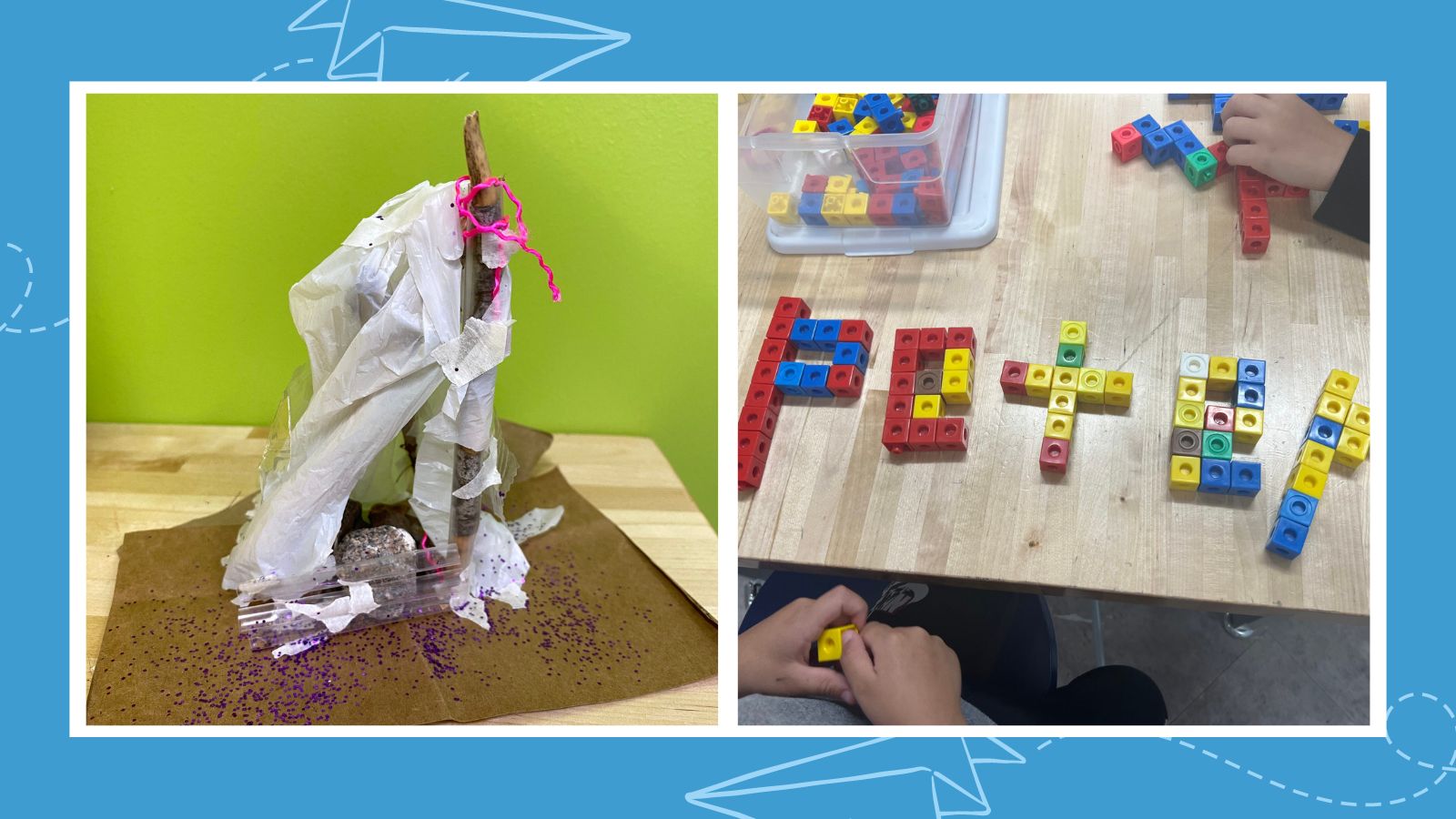
Scientific thinking develops when students are encouraged to ask questions, investigate problems, test ideas, and learn from evidence. Instead of memorizing scientific facts alone, students need opportunities to explore how the world works through observation and experimentation. Hands-on STEM activities provide these opportunities by connecting science, technology, engineering, and mathematics with real-life challenges.
Teachers can introduce meaningful STEM experiences using simple hands on STEM activities for students classroom materials such as paper, cardboard, water, seeds, measuring tools, and recycled objects. These activities help learners develop curiosity, logical reasoning, creativity, collaboration, and problem-solving skills while making lessons more engaging.
This guide explores 12 hands-on STEM activities for students, explains how each activity encourages scientific thinking, and provides practical strategies for implementing them in different grade levels.
What Are Hands-On STEM Activities?
Hands-on STEM activities are practical learning experiences that combine science, technology, engineering, and mathematics. Students investigate questions, construct models, conduct experiments, analyze results, and improve their designs.
For example, building a paper bridge combines engineering design with mathematics and physical science. Students must consider the bridge’s shape, measure its length, distribute weight, and test how much load it can support.
Effective STEM learning involves more than following instructions. Students should have opportunities to make predictions, compare results, explain their observations, and revise their ideas based on evidence.
Why Hands-On STEM Activities Encourage Scientific Thinking
Scientific thinking involves using observations, questions, evidence, and logical reasoning to understand a problem. Practical STEM experiences help students develop these skills through active participation.
1. Develops Curiosity and Questioning Skills
Students become more engaged when they can investigate questions that interest them. Activities such as testing which materials absorb the most water or discovering why some objects float encourage learners to ask questions and search for explanations.
Teachers can support curiosity by asking open-ended questions rather than immediately providing answers.
2. Strengthens Observation and Data Collection
Many STEM projects require students to measure, record, and compare results. These tasks teach learners to notice patterns and distinguish between what they observe and what they assume.
Recording the distance traveled by different paper airplanes, for example, gives students evidence they can use to compare designs.
3. Encourages Evidence-Based Reasoning
Students learn that a prediction is not necessarily a fact. By testing ideas and examining results, they discover why scientific conclusions should be supported by evidence.
When an experiment produces an unexpected result, students can investigate possible causes instead of treating the outcome as failure.
4. Builds Problem-Solving and Creativity
Engineering challenges encourage learners to develop multiple solutions to the same problem. Students can experiment with different designs, identify weaknesses, and make improvements.
This process builds persistence and helps students understand that successful problem-solving often requires several attempts.
5. Connects Classroom Learning With Everyday Life
Hands-on STEM activities demonstrate how scientific concepts apply to real situations. Students can investigate insulation, plant growth, simple machines, electricity, and water filtration using accessible materials.
These connections make abstract concepts easier to understand and help learners recognize the value of scientific knowledge.
12 Hands-On STEM Activities for Students
The following activities can be adapted for elementary, middle, and secondary classrooms. Teachers should adjust the difficulty, materials, and amount of independence according to students’ ages and abilities.
1. Build a Paper Bridge
Subjects: Engineering, physics, and mathematics
Materials: Paper, books, rulers, and small weights such as coins or counters.
Activity steps:
- Place two books a short distance apart to create bridge supports.
- Lay a flat sheet of paper between the books.
- Add small weights one at a time and record how much the bridge supports.
- Fold another sheet into an accordion or other shape and repeat the test.
- Compare the results and discuss which design performed best.
Scientific thinking question: How does the shape of a material affect its strength?
Students investigate how structural design influences load-bearing capacity. They can change one feature at a time, measure the results, and use their observations to improve the bridge.
For older students, introduce variables, repeated trials, averages, and simple graphs.
2. Investigate Water Absorption
Subjects: Science, mathematics, and environmental studies
Materials: Paper towels, tissue paper, cloth, cotton, small containers, water, and measuring tools.
Activity steps:
- Ask students to predict which material will absorb the most water.
- Cut equal-sized samples of each material.
- Add the same measured amount of water to each sample.
- Observe how quickly the materials absorb water and how much liquid remains.
- Record the results and compare them with the original predictions.
Scientific thinking question: Which material absorbs the most water under the same conditions?
Students practice making predictions, controlling variables, measuring quantities, and interpreting results. They can also discuss why absorbent materials are useful in cleaning products, clothing, and environmental applications.
For a fair comparison, keep sample sizes, water quantities, and testing times consistent.
3. Test Different Paper Airplane Designs
Subjects: Physics, engineering, and mathematics
Materials: Paper, measuring tape, pencils, and a clear testing area.
Activity steps:
- Have students create two or three paper airplane designs.
- Ask them to predict which design will travel the farthest.
- Launch each airplane from the same starting point using a consistent throwing method.
- Measure and record the distance traveled.
- Repeat each trial and calculate the average distance.
Scientific thinking question: Which design travels the farthest, and what evidence supports the conclusion?
Students explore how shape, balance, and air resistance influence flight. They also learn why repeating an experiment can produce more reliable results.
Encourage learners to change only one design feature at a time so they can better identify which change may have affected performance.
4. Design a Model Water Filter
Subjects: Environmental science, engineering, and chemistry
Materials: A clear container, clean gravel, sand, filter paper or cotton, and prepared muddy water.
Activity steps:
- Ask students why water treatment is important for communities.
- Build a simple filter using layers of gravel, sand, and filter material.
- Slowly pour prepared muddy water through the model.
- Observe the collected water and compare it with the original sample.
- Discuss which materials may have removed visible particles.
Scientific thinking question: How do different layers affect the appearance of filtered water?
This activity introduces filtration, material properties, environmental engineering, and the importance of testing a design.
Students should understand that a model filter may remove some visible particles without removing harmful microorganisms, dissolved chemicals, or other contaminants. Never drink the filtered water. Use the experiment only for observation and learning.
5. Investigate Light and Shadows
Subjects: Physics, mathematics, and astronomy
Materials: A flashlight, small objects, paper, pencils, and a ruler.
Activity steps:
- Place an object between a flashlight and a sheet of paper.
- Observe the shadow produced by the object.
- Move the light source closer to or farther from the object.
- Change the object’s position and measure the shadow.
- Record how the shadow changes with each adjustment.
Scientific thinking question: How does the position of a light source affect a shadow’s size?
Students investigate the relationship between light, distance, and shadow formation. They practice measuring, identifying patterns, and explaining why a shadow changes when the arrangement of objects changes.
Older students can investigate how the angle of a light source affects shadow length and connect their observations to the changing position of the Sun.
6. Compare How Different Surfaces Heat Up
Subjects: Physics, environmental science, and mathematics
Materials: Dark paper, light paper, aluminum foil, a thermometer, and sunlight or a suitable classroom lamp.
Activity steps:
- Place the different materials in the same testing area.
- Measure and record their starting temperatures.
- Expose them to the same light source for a fixed period.
- Measure their temperatures again.
- Compare the temperature changes and discuss possible explanations.
Scientific thinking question: Do different surfaces absorb energy at the same rate?
Students learn how to collect temperature data and compare changes. The investigation can introduce the concepts of light absorption, reflection, and heat transfer.
Keep the distance from the light source and exposure time consistent. Avoid hot lamps and allow materials to cool before handling them.
7. Build a Balloon-Powered Vehicle
Subjects: Engineering, physics, and mathematics
Materials: Lightweight cardboard, straws, bottle caps or suitable wheels, wooden skewers, tape, and balloons.
Activity steps:
- Construct a lightweight vehicle with freely rotating wheels.
- Attach a balloon and straw so escaping air pushes the vehicle forward.
- Inflate the balloon, release the vehicle, and measure the distance traveled.
- Modify one feature, such as the wheel alignment or vehicle mass.
- Repeat the test and compare the results.
Scientific thinking question: How do design changes affect the distance a vehicle travels?
The project introduces forces, motion, friction, and engineering design. Students must identify why a vehicle veers sideways or stops early and decide which changes could improve its performance.
For younger learners, provide a basic vehicle frame. Older students can calculate average travel distances or investigate how balloon size affects movement.
8. Investigate Seed Germination
Subjects: Biology, environmental science, and mathematics
Materials: Seeds such as beans, transparent containers, paper towels, water, labels, and a notebook.
Activity steps:
- Place seeds on moist paper towels inside labeled containers.
- Prepare different conditions, such as adequate moisture and limited moisture.
- Keep other conditions as similar as possible.
- Observe the seeds daily and record changes.
- Measure root or shoot growth and compare the results over time.
Scientific thinking question: How does water availability affect seed germination?
Students learn about plant development, biological observation, and the importance of controlling variables. They can create a table or graph showing growth over several days.
Use enough seeds to make comparisons more meaningful. If the class investigates light, temperature, or another factor, change that factor carefully while keeping other conditions consistent.
9. Create a Simple Electric Circuit
Subjects: Physics, technology, and engineering
Materials: A low-voltage battery pack, insulated wires, a small compatible bulb or LED, and a suitable holder.
Activity steps:
- Show students the battery, wires, and light source.
- Ask them to predict what is needed to make the light turn on.
- Connect the components to create a complete circuit.
- Observe what happens when the circuit is opened.
- Draw a diagram showing how the components are connected.
Scientific thinking question: Why does the light turn off when the circuit is broken?
Students investigate how an electrical circuit provides a path for current to flow. They develop troubleshooting skills by identifying loose connections and testing alternative arrangements.
Use only appropriate low-voltage classroom equipment. Never connect student-built circuits to household electrical outlets, and avoid short-circuiting batteries.
10. Introduce Coding Through Simple Algorithms
Subjects: Technology, mathematics, and logical reasoning
Materials: Paper cards, a grid drawn on the floor or board, and optional computers or tablets.
Activity steps:
- Create a grid with a starting point and a destination.
- Ask students to write instructions that move a person or object from start to finish.
- Follow the instructions exactly as written.
- Identify errors when the instructions lead to the wrong location.
- Revise the algorithm and test it again.
Scientific thinking question: How can instructions be organized to solve a problem accurately?
Students learn sequencing, debugging, pattern recognition, and logical reasoning. The activity demonstrates that a solution must be clear enough for someone else to follow.
For more advanced learners, introduce loops, conditions, or simple block-based programming.
11. Design a Solar Oven Model
Subjects: Energy, engineering, and environmental science
Materials: A cardboard box, aluminum foil, dark paper, clear plastic film, and a thermometer.
Activity steps:
- Create a simple insulated box with a reflective flap.
- Use foil to direct light toward the interior.
- Place dark paper inside and measure the starting temperature.
- Position the model in sunlight and record temperature changes.
- Compare the design with a version that has a different reflector or insulation arrangement.
Scientific thinking question: How can a model use sunlight to increase temperature?
Students explore solar energy, reflection, absorption, and insulation. They can investigate which design features appear to improve heating.
Use teacher supervision, avoid sharp edges, and do not use the model to prepare or consume food unless the equipment and process have been specifically designed and approved for safe food use.
12. Investigate Floating and Sinking
Subjects: Physics, mathematics, and materials science
Materials: A clear container of water, a tray, and assorted waterproof objects of different shapes and materials.
Activity steps:
- Ask students to predict which objects will float and which will sink.
- Test each object separately.
- Record the observations in a table.
- Compare objects made from different materials or with different shapes.
- Discuss why some objects float even when they are relatively large.
Scientific thinking question: What characteristics might help explain whether an object floats or sinks?
Students investigate buoyancy and material properties. They learn that an object’s behavior depends on factors including its density, shape, and the amount of water it displaces.
For older students, extend the activity by comparing objects of similar mass but different volumes.
How to Teach Scientific Thinking Through STEM Projects
A well-planned activity helps students understand not only what happened but also why it happened. Teachers can use the following process to structure hands-on STEM lessons.
Step 1: Start With an Investigable Question
Introduce a problem that students can investigate using available materials.
Examples include:
- Which paper structure supports the greatest weight?
- Which material absorbs the most water?
- How does light distance affect shadow size?
- Which design allows a vehicle to travel farther?
A focused question gives students a clear purpose for the investigation.
Step 2: Ask Students to Make Predictions
Before beginning the experiment, ask learners to write down what they expect to happen and explain their reasoning.
Predictions help students identify their existing ideas and compare those ideas with the evidence they collect.
Step 3: Plan a Fair Test
Help students identify the factor they will change, the result they will measure, and the conditions they should keep consistent.
For example, when comparing paper airplane designs, students should use the same starting position and measure distance using the same method.
Step 4: Observe and Record Evidence
Students should document measurements, observations, and unexpected results. Tables, diagrams, photographs, and graphs can make the evidence easier to interpret.
Encourage precise statements such as, “The folded bridge supported 18 counters before bending,” rather than vague statements such as, “The folded bridge was much stronger.”
Step 5: Analyze Results and Improve the Design
Ask students whether the results matched their predictions. If they did not, encourage learners to consider possible explanations.
In engineering activities, students should use the evidence to improve their designs and test them again. This makes revision an important part of learning rather than a sign of failure.
Step 6: Explain the Findings
At the end of an activity, ask students to explain what they learned and identify the evidence that supports their conclusions.
A useful format is:
- Claim: What did you discover?
- Evidence: What observations or measurements support your conclusion?
- Reasoning: How does the evidence explain the result?
This approach helps students communicate scientific ideas clearly and logically.
A Five-Day Hands-On STEM Lesson Plan
Teachers can use the paper bridge challenge as a short project that develops scientific thinking over one school week.
Day 1: Introduce the challenge
Explain the problem of building a bridge between two supports. Students sketch initial ideas, discuss possible materials, and predict which designs might be strongest.
Day 2: Build the first prototype
Students create their bridges using paper and a limited amount of tape. They document their designs and identify the features they expect to affect strength.
Day 3: Test and collect data
Groups add weights gradually, record the results, and compare the performance of different designs. Teachers remind students to use the same testing procedure.
Day 4: Improve the design
Students analyze weaknesses and modify one feature of their bridges. They test the improved versions and compare their results with the original designs.
Day 5: Present conclusions
Each group presents its design, explains the evidence collected, and describes what it would change in a future experiment. Students can also reflect on how collaboration influenced the outcome.
This plan combines engineering, measurement, evidence-based reasoning, and communication in a manageable classroom project.
Adapting STEM Activities for Different Grade Levels
Hands-on STEM activities are most effective when the challenge matches students’ developmental needs.
Elementary Students
Young learners benefit from short activities, familiar materials, visual instructions, and guided questions. Teachers can focus on basic observations, simple predictions, sorting, counting, and describing what happened.
Middle School Students
Middle school learners can design fair tests, identify variables, collect numerical data, create graphs, and compare alternative explanations. Group investigations also provide opportunities to practice scientific communication.
High School Students
Older students can work with more complex designs, mathematical models, statistical comparisons, digital sensors, programming, and independent investigations. They can also evaluate limitations in their methods and propose further experiments.
Across all grade levels, the goal is to give students increasing responsibility for asking questions, making decisions, and supporting conclusions with evidence.
How to Assess Scientific Thinking During STEM Activities
Traditional tests can measure factual knowledge, but practical STEM activities also allow teachers to assess how students approach unfamiliar problems.
Useful assessment methods include:
- Observation checklists: Record whether students ask questions, follow procedures, and use evidence.
- Science journals: Ask learners to document predictions, observations, measurements, and conclusions.
- Design portfolios: Collect sketches, prototypes, test results, and revised designs.
- Group presentations: Evaluate how effectively students explain their findings and respond to questions.
- Reflection prompts: Ask what worked, what did not, and what they would investigate next.
Assessment should reward careful reasoning and thoughtful revision, not only successful outcomes. A project that fails to work as expected can still demonstrate strong scientific thinking if students identify problems and learn from the evidence.
Common Challenges and Practical Solutions
Limited Classroom Resources
Many STEM activities can use recycled cardboard, paper, containers, string, and other low-cost materials. Teachers can organize shared resource stations and reuse safe materials across several lessons.
Different Levels of Student Confidence
Some learners may hesitate to share ideas or build unfamiliar models. Start with manageable challenges, provide examples without prescribing every step, and give students time to experiment independently or in small groups.
Limited Lesson Time
Choose activities that can be completed within one lesson or divide larger projects into short stages. Students can record observations during class and complete analysis or presentations in a later session.
Difficulty Explaining Unexpected Results
Students may assume an unexpected result means their experiment was unsuccessful. Teachers should explain that unexpected findings can reveal weaknesses in a method, overlooked variables, or a need for further investigation.
Keeping Every Student Involved
Assign rotating responsibilities such as materials manager, recorder, tester, and presenter. Ensure each student has opportunities to make predictions, handle materials, interpret evidence, and contribute to the final explanation.
Frequently Asked Questions
What are the best hands-on STEM activities for students?
Paper bridge challenges, water absorption tests, paper airplane investigations, seed germination experiments, simple circuits, and floating-and-sinking investigations are useful starting points. They use accessible materials and help students practice observation, measurement, prediction, and problem-solving.
How do STEM activities develop scientific thinking?
STEM activities encourage students to ask questions, make predictions, test ideas, collect data, identify patterns, and draw conclusions. These experiences help learners understand how evidence can support or challenge an explanation.
Can teachers conduct STEM activities without expensive equipment?
Yes. Many activities can be completed with paper, cardboard, seeds, water, containers, rulers, and other inexpensive materials. The quality of the investigation depends more on the question, testing procedure, and analysis than on expensive equipment.
How can teachers make STEM activities suitable for younger students?
Use short, concrete challenges with simple instructions and visible results. Ask questions such as “What do you notice?” and “What do you think will happen next?” As students develop, gradually introduce measurements, variables, and more independent investigations.
How do teachers know whether students are learning?
Look for evidence that students can explain their predictions, collect accurate observations, compare results, identify possible reasons for an outcome, and improve their approach. Science journals, practical demonstrations, and short presentations can help teachers assess these skills.
How often should teachers include hands-on STEM activities?
The frequency depends on the curriculum, available materials, and lesson time. Short investigations can be included regularly, while more complex engineering challenges can be planned as multi-day projects. Consistent opportunities to investigate and explain results help students develop stronger scientific habits.
Conclusion
Hands-on STEM activities give students meaningful opportunities to explore scientific ideas, solve problems, and learn through evidence. From building paper bridges to investigating seed growth and designing simple circuits, these experiences connect classroom knowledge with practical challenges.
Teachers can make STEM learning more effective by encouraging students to ask focused questions, make predictions, conduct fair tests, record results, and explain their conclusions. When learners are also given opportunities to revise their designs and reflect on unexpected findings, they begin to see scientific thinking as an ongoing process of investigation and improvement.
With thoughtful planning and accessible materials, schools can create engaging STEM experiences that nurture curiosity, strengthen critical thinking, and help students become confident problem-solvers.
